Aerospace Engineering Courses and Subjects Manbir Kaur

Aerospace Engineering Courses and Subjects

Manbir Kaur 

Every Year of your Life Counts!

Aerospace Engineering is a Bachelor Engineering degree of 4 years. These 4 years course involves of academic studies, theory and practical exams, live trainings, projects, workshops and 6 months end semester Internship. Courses available after passing 12th are 

BE/BTech in Aerospace Engineering

BSc in Aeronautical Science

BE in Aircraft Maintenance Engineering (AME)

BTech in Avionics Engineering

Diploma in AME

Aerospace training is a billion dollars industry. In India, the fees for BE/BTech degree is approximately 4-12 lakhs, depending upon the institution. While completing an Aerospace Engineering degree in USA cost $45,000 - $60,000, $50,400 in New Zealand, $47,000 in Canada, $45,000 in Australia, ₱80,000 in Philippines and 1200 euro in Germany. To add about germany, it is best country to study as it offers free education and many scholorships to national and international students. Subjects undertaken are mentioned year wise. In the first year, academic subjects includes of Introduction to Aerospace Engineering, basics of coding (C & C++ language), Engineering thermodynamic, applied chemistry, applied mathematics, Engineering drawing (AutoCAD or basic Engineering designing software), basic electrical and electonics Engineering. Second year Aerospace Engineering subjects are Applied fluid mechanics, theory of machines, computer aided design, Aerospace materials, Aerodynamics, strength of material, numerical methods, Aircraft structure, Aircraft propulsion, programming language and Aircraft production technology. During this year, it is mandatory to attend 6 weeks industrial training at any Aerospace company or you can learn designing software such as SolidWorks, CatiaV5 and Ansys Workbench from the certified learning institute. Third year includes the study of Aircraft systems and instruments, avionics, rocket propulsion, supersonic Aerodynamics, Aircraft design project, space Engineering, flight dynamics, computational mechanics, Spacecraft structure and civil aviation requirements. Final year of the degree mainly focuses on the practical learnings and trainings. Moreover, the subjects are helicopter Aerodynamics, industrial Aerodynamics, technical training, missile guidance and navigation, finite element method, Aerospace research project, boundary layer theory and flight dynamics lab. In each academic semester you have to work on so many live projects in order to put your theory learnings into practice.

BSc Aeronautical Science is a 3 year degree. First year subjects are mentioned as Introduction to Aeronautics, Engineering drawing, calculus, introduction to computer application, theory of flight, general chemistry, physics, Aircraft basic electronics, and soft skills. Second year is followed by Aircraft structures and construction, Technical Record and planning, Aircraft hardware and materials, Aero Engine, aviation meteorology, digital electronics, Aircraft propellers, thermodynamics, Aircraft fuel and lubricating system. Final year coveres Aircraft inspection, aviation safety and management, Aircraft communication and navigation system, Aircraft structural repAir, Aircraft composite material and Aircraft landing gear.

BTech in Avionics Engineering is a four year undergraduate degree providing the core knowlegde about the Aircraft electronic and computer systems. The study familiarizes with the concept of designing of new machinery by using programming language. Course syllabus includes of Engineering graphics, integral transformation, electromagnetics and wave propagation, basic electrical Engineering, numerical method, digital electronics, analog electronic circuit semiconductor devices, microprocessor and microcontrollers signal and systems, statistics computer networks, digital signal processing, control and guidance system. 

An aspirant after completing the bachelors degree can enroll for the masters. The four years bachelors course is enough to discover one’s interest about particular subject. As each Aerospace topic has very vast field to explore and learn. Persuing masters in Aerospace is a good plan out of all. Getting a 2 years masters degree is one step closer to a reputed career. After completing the bachelors, you can enrol in any of the following masters program.

MSc in Aerospace Engineering

ME/MTech in Aerospace Engineering

Master in Aeronautical Engineering

Master of Science in Aeronautics

Master in Aircraft Engineering

There are so many best universities/colleges providing scholorships based on the academic performance in the bachelors degree.

Manbir Kaur [Aero Engineer] 

Director    [Business Development]  

AirCrews Aviation Pvt. Ltd.

manbir@flying-crews.com

+91 8851365156

https://manbirkaur.vcardinfo.com


Aerospace Engineering Courses and Subjects
Manbir Kaur [Aero Engineer] 


Put the Interests of the Organization Ahead of Your Own by Shefali Singla

Put the Interests of the Organization Ahead of Your Own

@Shefali Singla


Put the Interests of the Organization Ahead of Your Own?
πŸ€”Am I willing to put the Interests of the Organization Ahead of my Own?

You can not do all those things at once. Pick a few that you are passionate about. Latter if you decide you don't really like one of these, then you can drop it and add another. It does seem like the first step in life is getting a job. You can not do much till you do that. Even if you have to take something not in your line of work, you need a job. You can always continue looking for what you want. I would rather wash dishes than sit at home and not have a job. Without a job, you really can not enjoy anything.
 Make a list of all the things you want to do. Figure out how much time you can actually devote to your hobbies. Go back to your list and decide how you want to divide that time. Some things will have to be relegated to a new list of "things I would like to do later."
You will find which things are the most important by doing this. Since you have a finite amount of time, trying to use more than you have would provide you nothing but frustration.
What you love doing is your passion.
What you get paid for doing is your job.
What you're good at is your field of expertise.
Find something that fulfills all three categories. That's your Purpose.
Prioritize it. Put it at the very top of your Very Important Stuff list.
The rest are fine as hobbies.
Shefali Singla
HR Manager
Aircrews Aviation Pvt Ltd
shefalisingla.aircrews@gmail.com


Become a well Organised Person and Professional #Anshu Aggarwal

Become  a well Organised Person and Professional

#Anshu Aggarwal 
πŸ€”Advice about Becoming a well Organised Person and Professional

Organizational skills are some of the most important proficiencies you can have as an employee. Being organized will allow you to meet deadlines, minimize stress and carry out your duties more efficiently. To learn how improving your organizational skills can affect your work performance, you need to know what this skill set entails. In this article, we look at different types of organizational skills, suggest what you can do to improve your skills and discuss how to highlight organizational skills on a resume or in a job interview.
WRITE EVERYTHING DOWN - If we solely try to depend on our brain then let me tell you we are tend to forget something or other. So rather than doing than do write it down whatever comes in your mind.
CATEGORIES YOUR NOTES - When you write it down the things which came into your mind, then you can categories it according to your priorities or according to headpoints like Family, work, personal, healthcare, relationship.
START USING PLANNERS/ CALENDARS/ BULLET JOURNAL - It is to track your working. Obviously don't make a confusion by using all of them and keep it minimalistic as possible. This bullet journals will take shape of your brain.
CREATE YOUR TIDY UP PRACTICE- Do deep cleaning of your workplace, hous, By cleaning your environment. (G.Y.S.T. - get your s**t together) . It's necessary because our environment plays a big role in our state of well being. Though consciously or cognitively we don't pay attention to our atmosphere but our body do.
ORGANIZE YOUR FINANCIAL MATTERS - Put reminders on your phone's or calendars or planner about your insurance policy payments, rent payments, maintenance payments. Keep check whether your ECS( Electronic clearing system) is cutting properly from your accounts or not.
START SETTING REMINDERS FOR IMPORTANT EVENTS.
DECLUTTER YOUR TECHNOLOGY- Most important is unsubscribe to those emails which are of no use at all to you so that your email will be have only important things rather than having piles of spam mails or advertising mails. Delete those screen shot which serves nothing to you now. Delete those contacts which you don't need on daily basis. ( You can write it down in one dairy for emergency) . Declutter those YouTube downloads which you have seen already.
PUT YOUR IMPORTANT DOCUMENTS AT ONE PLACE AND ORGANIZE IT .
HAVE A PASSWORD LOG - In the era of technology where we operate things online most of the times but as said earlier their is possible (200% in my case) that we tend to forget username or password. So for that keep handwritten notes of your username and password of different accounts at one diary. And guyz keep it safe obviously without saying.
CREATE A ROUTINE USING HABIT STACKING- I have written answer for that so do check it.

Anshu Aggarwal
HR Manager
AirCrews Aviation Pvt Ltd
aircrews.anshugoyal@gmail.com


Intellectual Property, or IP

Intellectual Property, or IP for short, refers to unique creations made through the use of the human mind which can be legally owned. Usually, for the purposes of IP law, this means that the ideas have commercial value of some kind. Intellectual property rights differ depending on the type of intellectual property concerned, as the law differs in its protection of different types of ideas and their applications. For example, trademarks, patents, and copyright are all examples of intellectual property that are each protected by separate legislation.

Ownership rights vary depending on the type of intellectual property in question. Copyright, for example, is automatically and freely applied to any original and creative work published by an author eligible for copyright protection in Australia (a citizen, resident for work purposes, or other protected persons). On the other hand, patents and trademarks require a paid registration application to be made to IP Australia.

Intellectual property law can be used to protect brands, inventions, and other important assets. Therefore it is important that businesses learn to manage and protect their intellectual property.

IP Australia outline the importance of intellectual property for businesses and other organisations through some relevant case studies.

WiFi is something that millions of businesses and consumers utilise every day. Invented through the efforts of CSIRO radio astronomy researchers, WLAN as it was originally known was patented in 1996.

Although there were a number of competing technologies that existed at the time, WLAN was unique in that its hardware enabled a signal to be transmitted with reduced echo, which preserved signal strength. This unique and useful innovation is what entitled WLAN to patent protection.

Initially it was difficult for the CSIRO to find commercial interest in their invention. Then, in the early 2000s, things took off as the internet became more widely-used.

The CSIRO subsequently attempted to convince information technology companies to acquire licenses to use the patented WLAN technology. This proved unsuccessful at first, with many manufacturers using the design without license.

Finally, after a protracted legal battle with some of the world’s most powerful ICT companies, the CSIRO managed to secure license agreements with about 90 percent of the industry. This resulted in an estimated $430 million in revenue from WiFi licence rights as of 2012.

This would not have been possible if the technology hadn’t been patented in 1996. The patent issued by the Australian government managed to withstand intense legal scrutiny from courts in the US, therefore allowing the CSIRO to profit from its invention.

Shefali Singla

HR Manager

Aircrews Aviation Pvt Ltd

shefalisingla.aircrews@gmail.com

https://art2.vcardinfo.com


Intellectual property, or IP for short, refers to unique creations made through the use of the human mind which can be legally owned. Usually, for the purposes of IP law, this means that the ideas have commercial value of some kind. Intellectual property rights differ depending on the type of intellectual property concerned, as the law differs in its protection of different types of ideas and their applications. For example, trademarks, patents, and copyright are all examples of intellectual property that are each protected by separate legislation.

Ownership rights vary depending on the type of intellectual property in question. Copyright, for example, is automatically and freely applied to any original and creative work published by an author eligible for copyright protection in Australia (a citizen, resident for work purposes, or other protected persons). On the other hand, patents and trademarks require a paid registration application to be made to IP Australia.

Intellectual property law can be used to protect brands, inventions, and other important assets. Therefore it is important that businesses learn to manage and protect their intellectual property.

IP Australia outline the importance of intellectual property for businesses and other organisations through some relevant case studies.

Well known indigenous artist Wamod Namok learnt first-hand the value of intellectual property when his copyright was infringed in 2005. Reproductions of Namok’s famous work, Kangaroo, were listed for sale online. The listings stated that the reproductions were licensed and royalties would be paid to Namok as a percentage of sales. This proved to be false, and the reproductions were unauthorised. Namok received no royalties for the sale of his work.

Artists in the Black, an organisation with which Wamod Namok was associated, secured the pro bono assistance of lawyers who issued a letter of demand to the eBay operator who was selling the unauthorised copies.

The operator responded with a claim that he had obtained a ‘license’ signed by Namok himself at the gallery which purchased the original Kangaroo. Namok, who is unable to read or write English, thought that the document he signed was a mere receipt of purchase being issued regarding the sale of the original Kangaroo to the gallery.

Upon learning this, the lawyers acting on behalf of Artists in the Black issued another letter of demand, this time stating that the license was void because it was made without proper understanding on behalf of the artist. The letter also made it clear that the eBay operator and gallery had absolutely no legal right to make or sell reproductions of Kangaroo, and that they were to ensure that they never did so again.

This case is an example of how important it is for artists and other intellectual property rights holders to manage and protect their IP. There are some unfortunate cases, such as that of Wamod Namok, where the rights holder is unaware of their rights under copyright, resulting in unlawful use of copyright material.

Anshu Aggarwal

HR Manager

AirCrews Aviation Pvt Ltd

aircrews.anshugoyal@gmail.com

http://art3.vcardinfo.com


Keep Yourself and Your Professional and Personal Life Well Organised Muskan Goyal

πŸ€”Keep Yourself and Your Professional and Personal Life Well Organised

#Muskan Goyal 

How do you keep Yourself and Your Professional and Personal Life Well Organised?

#Really organized people are not born organized, they have to cultivate healthy habits, which then help them to stay organized.

So even if you think you are a very disorganized person, you can learn to be organized. From planning things, jotting things down, to ditching the unnecessary and organizing things that matter, you will become an organized person as long as you’re willing to learn and practice.

Here are the essential habits on how to organize your life:

1. Write Things Down:-

We all know someone that remembers every birthday and sends cards for every holiday. It’s not magic and they don’t use memorization. Trying to remember things will not help you to stay organized. You should try writing things down.

A pen and some paper is our way of remembering things externally, and it’s much more permanent. You can also use this powerful Digital Brain.

You will only further complicate your life by trying to contain important dates and reminders in your head. Write down everything: shopping lists for groceries, holiday gifts, home decor, and important dates like meetings and birthdays.

As an experiment, try writing down people’s names shortly after you meet them (when they’re not looking). I’ll bet you remember a lot more names that way.

2. Make Schedules and Deadlines:-

Organized people don’t waste time. They recognize that keeping things organized goes hand-in-hand with staying productive. They make and keep schedules for the day and week. They make deadlines and set goals. And most importantly, they and stick to them!

Similarly, by living a cluttered lifestyle, you will not have the time or space to make your deadlines or achieve your goals.

As an experiment, look at your bucket list or make one. Write down the things you want to achieve this year or in your life. Then write down what you need to do to achieve them.

3. Don’t Procrastinate:-

The longer you wait to do something, the more difficult it will be to get it done. If you want your life to be less stressful and less demanding, then organize as soon as you can. Putting in the effort to get things done as soon as possible will lift the weight off of you from doing it later.

As an experiment, think of one thing that you should organize in your life. Write it down. Then write down when you can do it and what you need to get it done. If you can get it done right now, then go do it!

4. Give Everything a Home:-

It’s easy to get lost if you don’t have a home. Keeping your life organized means keeping your things in their proper places. Organized people keep order by storing things properly and by labeling storage spaces.

As an experiment, choose one place in your home that you can re-organize. If there are scattered items, then group them together. Once you’ve sorted everything, find or make a “home” for similar items, label the “homes,” and put them in the proper places.

For example, a cup holder for your pens and pencils should go in an easily accessible place, but the rarely used craft materials can be stored out of sight.

5. Declutter Regularly:-

Find time each week to organize. Highly organized people make sure they find time every week or more to organize their things. Stuff does not stay organized on its own; it needs to be reorganized continuously and consistently.

As an experiment, look at your schedule and find a time to organize, then do it.

6. Keep Only What You Need:-

More stuff means more clutter. People who live organized lives only keep what they need and what they really really want. Having fewer things also means that you enjoy those things more and feel better about using everything you own, rather than letting half of what you own collect dust.

Have you ever felt like you don’t have the space to keep all the stuff you own? Instead of renting a storage unit or buying a larger home, get rid of some things.

As an experiment, write down the number of things you think you actually need. Then, write a list of all the things that you own. If the number of things you actually own exceeds your ideal need list, then it’s time to organize.

7. Know Where to Discard Items:-

Do whatever you can to get rid of stuff. Less stuff means less clutter.

Donate to thrift stores. Sell on Craigslist or eBay. Take a trip to the recycling center. Set up a garage sale. Find a place to get rid of your things.

As an experiment, choose one space in your house to purge. Go through shelves, drawers and boxes. Everything you find that you don’t need, set aside. Make a pile of things to maybe keep, which you can go through later, and a pile of things to discard now. Then find a way to kick those things out the door immediately.

8. Stay Away from Bargains:-

You have removed the things you don’t need. Will you replace them when you see something on sale?

Instead of bargain shopping without planning ahead, write down down exactly what you need and buy only those items. Organized people do not give in to false advertising. Items on sale will only produce more clutter.

As an experiment, go to a shopping mall with no money. Just look at all the things on sale that you wish you could buy if you had brought your wallet or purse.

If you find nothing, then good for you. If you made a list, then keep that list somewhere and look at it a month from now. If you still want it, then it’s safe to buy.

9. Delegate Responsibilities:-

A really organized life is not overfilled with responsibilities, meetings and deadlines. In fact, it has less because things that create stress have been slowly organized out.

As an experiment, look at your to-do list or make one. Go through the list and find one task that you can remove from your list or give to someone else. Now feel the stress of having to do it fall away.

10. Work Smart and Hard:-

Put in a little Smart Effort. Actually, put in a lot of effort when necessary.

Once you have delegated responsibilities and made a schedule, then you can organize what you have to do and when you can do it.

Staying organized is not all a breeze. It requires that you work hard with recognition that when you work harder, you can enjoy your clutter-free home life later. Work Smart and Harder when you feel like giving up today.


Muskan Goyal 

HR Manager

muskangoyal.aircrews@gmail.com https://goyalmuskan.vcardinfo.com/


How Internet is Changing the Game Companies Like Airbnb, Facebook, Uber, has Unique Branding Platform Business

How the Internet is Changing the Game Companies Like Airbnb,  Facebook, Uber, has  Unique Branding Platform Business


How Internet is Changing the Game Companies Like Airbnb,  Facebook, Uber, has  Unique Branding Platform Business

#Amazon

#Air BNB

#Facebook

#Instagram

#Uber 

How Internet is Changing the Game 

#Apps, 

#Books ,

#Blogs,

#Content, 

#Copyrights,

#Digi Docs,

#Patents,

#Trademarks,

#Trade Secrets,

Airbnb, Uber and the rest: the Rise of the Platform Business,

Companies Like Airbnb,  Facebook, Uber, Require Unique Branding

Air BNB

Facebook

Instagram

Uber

#Bitcoin #Amazon #UBER #Facebook #AirBNB #Alibaba  


Leadership Power Leadership Power Arshdeep Kaur

Leadership Power

Arshdeep Kaur 

Power is the ability to influence the behavior of others with or without resistance by using a variety of tactics to push or prompt action.

Power is the ability to get things done. People with power are able to influence others behavior to achieve a goal or objective. Others may resist attempts to make them do certain things, but an effective leader is able to overcome that resistance. Although people may regard power as evil or corrupt, power is a fact of organizational life and in itself is neither good nor bad. Leaders can use power to benefit others or to constrain them, to serve the organization’s goals or to undermine them.

An effective leadership helps the employees to work together in close coordination at the workplace and strive hard to accomplish tasks within the stipulated time frame.

A job mismatch at the workplace leads to politics and eventually demotivated employees.

A good leader does not impose work on the employees. The roles and responsibilities must be delegated as per the interest and specialization of the individuals.

Leadership gives a sense of direction to its employees. Every individual knows what he is supposed to do at the workplace.

An effective leadership reduces the chances of politics and conflicts in the organization. Employees stick to an organization for a longer duration under the guidance of able leaders.

Stress is contagious, so it is important to prevent your own stress from cascading to your team to safeguard their performance and well-being. One way to do this is by being mindful of the physical and psychological resources that you are providing your subordinates with during unstable times. Are they being asked to do too much with too little? Are they aware of the uncertainty around them? And if so, how can you reduce their stress? Being able and willing to see yourself through others’ eyes is a key leadership attribute. And while being authentic with your team might help you lead effectively in general, it can backfire when it comes to sharing your stress. You need to find a balance between showing your true self and avoiding the negative effects that this could entail if you contaminate your team with your stress. Your subordinates are unlikely to perceive you as disingenuous if you refrain from sharing something for their good. That said, you do need someone with whom you can share your stress and fears within the organization. This is where your trust cabinet is even more important. Overall, maintaining stability within your team and reducing uncertainty can then be crucial in a stressful context.

A Leader is one who inspires others to act. Good leaders possess a type of power that encourages self-improvement and team building and promotes a positive work culture. The types of power are how people are influenced. The Top Common types of Power in Leadership are:

#Legitimate

#Coercive

#Referent

#Charisma

#Expert

#Information

#Reward

#Moral

#Connection

#Founder

Arshdeep Kaur 

HR Manager

AirCrews Aviation Pvt Ltd aircrews.arshdeepkaur@gmail.com

https://arshdeepkaur.vcardinfo.com


Importance of Intellectual Property by Muskan Goyal


Importance of Intellectual Property [Case Studies]

Muskan Goyal

Intellectual property, or IP for short, refers to unique creations made through the use of the human mind which can be legally owned. Usually, for the purposes of IP law, this means that the ideas have commercial value of some kind. Intellectual property rights differ depending on the type of intellectual property concerned, as the law differs in its protection of different types of ideas and their applications. For example, trademarks, patents, and copyright are all examples of intellectual property that are each protected by separate legislation.

Ownership rights vary depending on the type of intellectual property in question. Copyright, for example, is automatically and freely applied to any original and creative work published by an author eligible for copyright protection in Australia (a citizen, resident for work purposes, or other protected persons). On the other hand, patents and trademarks require a paid registration application to be made to IP Australia.

Intellectual property law can be used to protect brands, inventions, and other important assets. Therefore it is important that businesses learn to manage and protect their intellectual property.

IP Australia outline the importance of intellectual property for businesses and other organisations through some relevant case studies.

#Copyright

In Australia, copyright protection is enforced through the Copyright Act 1968 (Commonwealth). As this is federal legislation, the protections afforded under the Act are uniform throughout the country. The Act has been the subject of several amendments to ensure that it has kept up-to-date with new forms of creative expression. IP Australia interprets copyright as an instrument designed to protect any original expression of an idea, but not the idea itself.

For example, books, journals, newspapers, artworks, recordings of video or sound, written music or lyrics, films, film scripts, computer databases, and programs are just some examples of the type of works that are entitled to free and automatic copyright protection.

There are circumstances when it is lawful for another party to use copyright material, but these circumstances are clearly defined and quite narrow, meaning that it is hard for abuse of the material to occur as a result of lawful use. If you are unsure of your exclusive rights under copyright, or believe your copyright has been infringed, you should consult with an intellectual property lawyer to ensure that any issue is resolved as quickly as possible.

#Trademarks

A trademark may be a sign or symbol that is used to differentiate your products from those of other traders or organisations. Trademark rights can be granted to an applicant for a word, phrase, smell, logo, shape, colour, etc that may be used to identify the applicant’s brand. Once granted, a trademark awards exclusive commercial rights to the owner regarding the sale, licensing, or use of that trademark with the products it is registered for.

Like Copyright, trademarks are also governed by Commonwealth legislation. The Trademarks Act 1995 offers awards uniform trademark rights across Australia.

A trademark can be licensed or sold once rights are acquired; this is an example of how your intellectual property can become a tangible asset as well as a vital marketing tool.

#Patents

Patents are licenses issued by the government (through IP Australia) which grant inventors exclusive rights to the commercialisation of an invention. That invention can be a device, method, substance, or process which is useful, new, and inventive compared to anything that is already known.

Patents are legally enforceable through the Commonwealth Patents Act 1990.

Patents, like trademarks, require a paid application to be submitted to IP Australia for consideration. Unlike a trademark application, which is a fairly straightforward process, patent applications take many months to complete and are subject to a number of difficulties. Patent applications are often rejected due to applications being filed with improper information, or not meeting formality requirements. For this reason it is important to have patent applications checked by an intellectual property lawyer or patent lawyer before submission to ensure that they meet IP Australia’s strict requirements.

#Case Studies

#Trademark – Australian Made, Australian Grown

A highly recognisable trademark exists in the form of the Australian Made, Australian Grown logo. Consisting of a golden kangaroo within a green triangle, the logo is an example of a trademark that is licensed by the not-for-profit organisation, Australian Made, to products that are made or grown completely within Australia.

According to IP Australia, the Australian Made, Australian Grown logo is the only registered country-of-origin trademark for Australian products. It is used by over 1700 companies on over 10,000 products sold domestically and internationally.

This trademark, like all others that are entitled to legal protection in Australia, is registered through IP Australia. It is a potent example of the ability a trademark has to convey quality and authenticity. 

Patents – WLAN (WiFi)

WiFi is something that millions of businesses and consumers utilise every day. Invented through the efforts of CSIRO radio astronomy researchers, WLAN as it was originally known was patented in 1996.

Although there were a number of competing technologies that existed at the time, WLAN was unique in that its hardware enabled a signal to be transmitted with reduced echo, which preserved signal strength. This unique and useful innovation is what entitled WLAN to patent protection.

Initially it was difficult for the CSIRO to find commercial interest in their invention. Then, in the early 2000s, things took off as the internet became more widely-used.

The CSIRO subsequently attempted to convince information technology companies to acquire licenses to use the patented WLAN technology. This proved unsuccessful at first, with many manufacturers using the design without license.

Finally, after a protracted legal battle with some of the world’s most powerful ICT companies, the CSIRO managed to secure license agreements with about 90 percent of the industry. This resulted in an estimated $430 million in revenue from WiFi licence rights as of 2012.

This would not have been possible if the technology hadn’t been patented in 1996. The patent issued by the Australian government managed to withstand intense legal scrutiny from courts in the US, therefore allowing the CSIRO to profit from its invention.

Copyright – Wamod Namok, Kangaroo

Well known indigenous artist Wamod Namok learnt first-hand the value of intellectual property when his copyright was infringed in 2005. Reproductions of Namok’s famous work, Kangaroo, were listed for sale online. The listings stated that the reproductions were licensed and royalties would be paid to Namok as a percentage of sales. This proved to be false, and the reproductions were unauthorised. Namok received no royalties for the sale of his work.

Artists in the Black, an organisation with which Wamod Namok was associated, secured the pro bono assistance of lawyers who issued a letter of demand to the eBay operator who was selling the unauthorised copies.

The operator responded with a claim that he had obtained a ‘license’ signed by Namok himself at the gallery which purchased the original Kangaroo. Namok, who is unable to read or write English, thought that the document he signed was a mere receipt of purchase being issued regarding the sale of the original Kangaroo to the gallery.

Upon learning this, the lawyers acting on behalf of Artists in the Black issued another letter of demand, this time stating that the license was void because it was made without proper understanding on behalf of the artist. The letter also made it clear that the eBay operator and gallery had absolutely no legal right to make or sell reproductions of Kangaroo, and that they were to ensure that they never did so again.

This case is an example of how important it is for artists and other intellectual property rights holders to manage and protect their IP. There are some unfortunate cases, such as that of Wamod Namok, where the rights holder is unaware of their rights under copyright, resulting in unlawful use of copyright material.

Muskan Goyal

HR Manager

muskangoyal.aircrews@gmail.com 

https://goyalmuskan.vcardinfo.com


How Internet is Changing the Game
#Apps, 
#Books ,
#Blogs,
#Content, 
#Copyrights,
#Digi Docs,
#Patents,
#Trademarks,
#Trade Secrets,


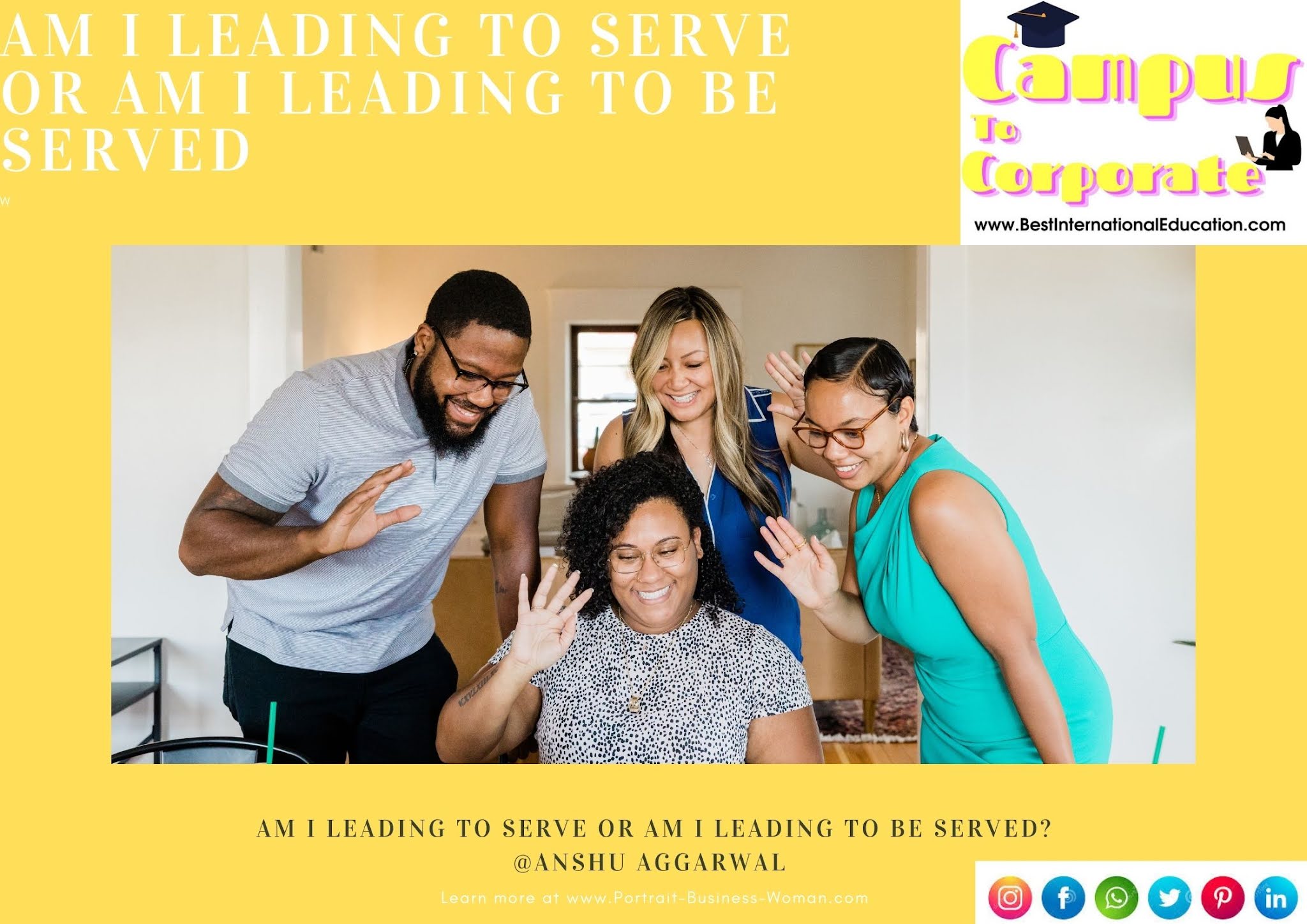
Am I Leading to Serve or am I Leading to be Served by Anshu Aggarwal

Am I Leading to Serve or am I Leading to be Served

@Anshu Aggarwal 

Holding a posture of servant Leadership requires one to examine their goals: what do you hope for? These are aspirations beyond the immediate business deliverables at hand. Rather, they reflect a desire to make an impact that remains long after the Leaderis gone from the position. When I asked Ken what he wants to be remembered for in this role once he moves to another opportunity, he realized that beyond over exceeding the business objectives, he wanted his team and clients to remember him as someone they would want to work with again because of what they learned from him. As a servant leader, one must aspire to make an impact beyond one’s own ambitious or material needs. It is this ability to look and strive beyond self-focus that enables a person to lead by serving.

Leading by serving means looking beyond oneself to the contribution you can make to others. This does not necessarily mean following in the world-changing footsteps of a Mahatma Ghandi or Martin Luther King, Jr. Rather, every manager has the ability to make contribution in their day-to-day role.

Take some time to examine your leadership approach. What changes can you make in your attitude, actions, and aspirations, to allow serving to be part of your leadership repertoire all year long

Attitude

What one believes about being a Leaderand serving will in large part drive their ability to adopt such principles. Take for example, Ken, a VP at a major technology company, whom I coached. Ken’s approach to managing his unit was that his staff exists to help him reach the division goals. In fact, while he could not initially see nor admit it, his attitude was one of “you are here to serve me” rather than “I am here to serve you”. It was no surprise, therefore, that Ken experienced significant turnover in his group and complaints about his autocratic management style ran rampant throughout the organization. With a heavy dose of feedback, Ken realized the benefit of flipping his script. If he could channel his energy to helping his team achieve the goals rather than seeing his staff solely as a means to his end, his results as a Leaderwould have far better yield.

Action

While attitude is the place to start, follow-through is critical. How does a leader’s day-to-day actions embrace the principle of serving? At its core, a servant leader’s actions demonstrate consistent consideration of others’ agendas besides his/her own. This is achieved by the acts of listening, dialoguing, clarifying expectations, and making integrity-driven decisions. Ken, in his efforts to improve his leadership impact, began modifying his actions. He spent time listening to the concerns and ideas of his staff and peer stakeholders. He brought transparency to his decision making whenever possible making it clear that he was taking into consideration what was best for the organization and the relevant stakeholders involved. Over time, his consistent actions enabled him to more strongly lead his group through stressful, ambiguous situations.

Aspirations

Holding a posture of servant leadership requires one to examine their goals: what do you hope for? These are aspirations beyond the immediate business deliverables at hand. Rather, they reflect a desire to make an impact that remains long after the Leaderis gone from the position. When I asked Ken what he wants to be remembered for in this role once he moves to another opportunity, he realized that beyond over exceeding the business objectives, he wanted his team and clients to remember him as someone they would want to work with again because of what they learned from him. As a servant leader, one must aspire to make an impact beyond one’s own ambitious or material needs. It is this ability to look and strive beyond self-focus that enables a person to lead by serving.

Take some time to examine your leadership approach. What changes can you make in your attitude, actions, and aspirations, to allow serving to be part of your leadership repertoire all year long?


Anshu Aggarwal

HR Manager

AirCrews Aviation Pvt Ltd

aircrews.anshugoyal@gmail.com

http://art3.vcardinfo.com


https://bit.ly/3iAOtGQ

#Leadership Challenge, #Building #Leadership  #presence with #mindfullness #Reflections#authenticLeadership  #reinventing #Leadership    #simplyimprovise #gratitudeattitude #connectionsmatter #Leadwithempathy #Leadership presence #emotionalintelligence #mindfulLeader#Leadership development #empathymatters#Leadwithempathy #Leadership presence #emotionalintelligence #mindfulLeader#Leadership development #empathymatters#Leadership Challenge  #Building #Leadership  #presence with #mindfullness #Reflections